
Through every crisis, care must continue: Inside Lebanon’s refugee mental health response
Across Lebanon, vital mental health and psychosocial support is helping refugees and host communities facing immense need.
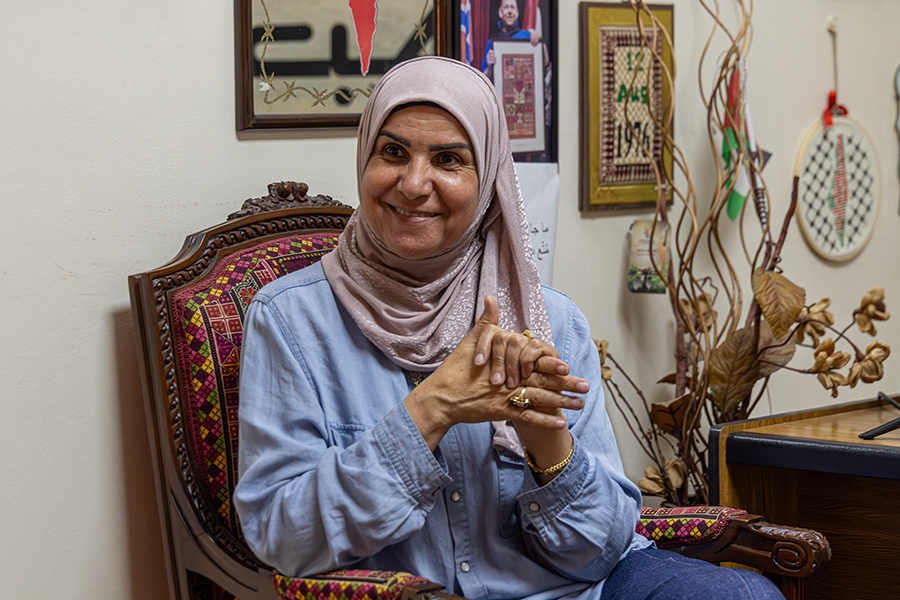
Lebanon hosts more refugees per capita than any other country in the world, with people from across the Middle East, including Palestine, living in one of the country’s 12 refugee camps. Refugee communities in Lebanon face immense challenges, including extreme poverty, repeated displacement, overcrowded camp conditions, and the continued impact of conflict and instability within the country. These overlapping crises have severe consequences for people’s health and wellbeing.
Mental Health Care in Lebanon
We spoke to Khalwa Khalaf, Mental Health Programme Coordinator, overseeing five mental health centres that support children and families across Palestinian refugee camps and surrounding communities in Lebanon. Although she is deeply familiar with the difficult realities refugees face, this is not where she begins. Instead, she talks about the families: parents who have lost their livelihoods, children displaced from their homes, families struggling to afford medication, and communities that have endured one crisis after another, with little time to recover before the next begins.
For many years, IHP has supported the work of Anera, International Medical Corps, HPIC and Medair to distribute medicines and medical supplies, including mental health medication, to vulnerable communities. This support helps bridge critical gaps in access to healthcare, ensuring people can continue to receive the treatment they need.
Young children requiring mental health support
For many of the children and young people who arrive at the centres, the challenges extend far beyond mental health alone.
Some require psychological counselling, others need psychomotor therapy, developmental support or psychiatric care. Many require medication to help manage complex conditions and improve their ability to participate in daily life. One child may even need several forms of support at the same time.
Yet, providing that support has become increasingly difficult.
"There are children who need two or three medications," Khalwa explains. "Some families simply cannot afford them."
Lebanon's economic crisis has dramatically increased the cost of medicines while reducing many families' ability to pay for treatment. The COVID-19 pandemic added further strain, followed by continuing instability and conflict that have left communities struggling to recover.
The programme prioritises support for families facing the greatest financial hardship, helping cover the cost of essential medicines whenever possible. However, the need consistently exceeds available resources.
For Khalwa, it is the youngest children who weigh most heavily on her mind.
"The circumstances are very difficult. And these children…the young children, I really worry about them," she says. "How much can their parents protect them? How much can they support them in these circumstances? How much can they give them when people have been unemployed for months?"
"They relied on their daily income from their work in the agricultural lands, in the orchards, from their work as employees in shops or companies. Today, everything has stopped."
How much can their parents protect them? How much can they support them in these circumstances? How much can they give them when people have been unemployed for three months?
– Khalwa, Mental Health Programme Coordinator –


Conflict, displacement and continuity of care
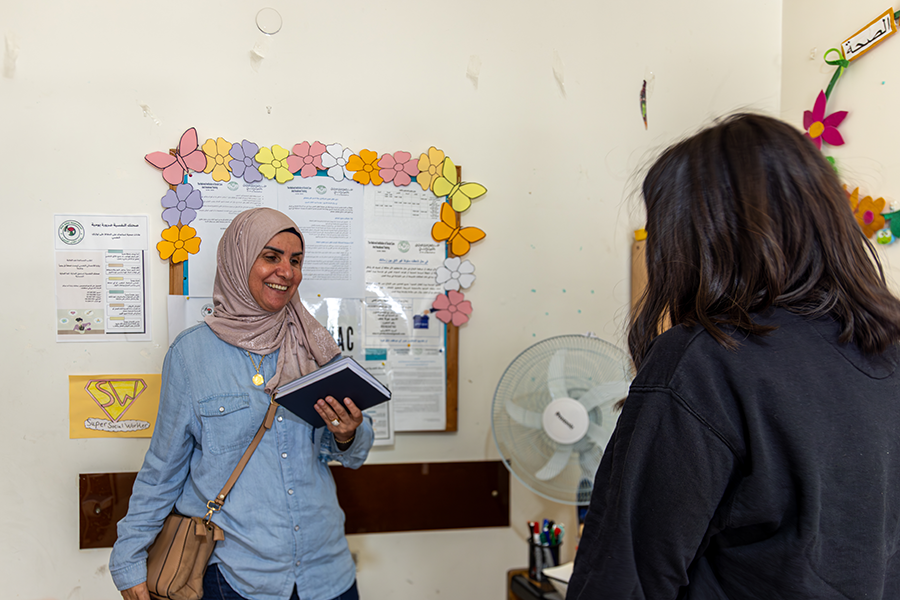
In Lebanon, the conflict has caused further displacement. During this time the programme quickly adapted its approach to ensure that children maintained their routines. Staff continued working to ensure children received their prescribed medications, arranging consultations and finding ways to deliver treatment despite damaged infrastructure and restricted movement.
Many of the children supported by Khalwa and her team struggle with anxiety, stress and depression. Changes in routine, displacement from home, the realities of conflict and uncertainty about the future can have a significant impact on children's wellbeing, particularly those already living with developmental or mental health conditions.
Partnership and long-term concerns
Yet Khalwa remains concerned about what comes next.
While many people focus on the immediate impacts of conflict, she worries about the long-term psychological consequences for children growing up amid repeated crises.
"I always think about these people after the war," she says. "What will happen to them?"
It is a question that drives her work every day.
Across Lebanon, thousands of children are carrying the emotional weight of economic hardship, displacement and uncertainty. Through the dedication of local mental health professionals and the support of humanitarian partners, families continue to access care, treatment and hope in extraordinarily difficult circumstances.
Because while the crises may change, the need for access to healthcare continues to grow. Through its partnerships with organisations such as Anera, IHP continues to help bridge critical gaps in care, ensuring vulnerable families can access the medicines and support they need to rebuild their lives.
Help us deliver access to medicine all year round
Join our giving community and help us transform the health outlook of families every single month.

See how your donation makes a difference
£5 can help us to give 15 people treatment
£20 will provide 16 children with antibiotics
£100 will provide 83 pregnant women with life saving medicine.
£450 will provide am emergency medical kit to 60 families.
Whatever you give, you could be making a life-changing, even life-saving difference to someone every month.
See how your donation makes a difference
£5 is enough to source and send £600 worth of medical supplies a year to people in need; enough to help approximately 50 people around the world.
£10 is enough to source and send £1,200 worth of medical supplies a year to people in need; enough to help approximately 100 people around the world.
£25 is enough to provide around 750 treatments in a year, helping approximately 250 people in need; and for some, is the difference between life & death.
£100 is enough to provide medicines and supplies for approximately 1,000 people a year living in disaster-hit and vulnerable communites.
Whatever you give, you could be making a life-changing, even life-saving difference to someone every month.
.jpg)
Help us deliver access to medicine all year round
From fundraising to delivering medicines, you can also support our vital work in other ways.
See other ways to help


Fox Court, 14 Gray's Inn Road,
London, WC1X 8HN
United Kingdom


Fox Court, 14 Gray's Inn Road,
London, WC1X 8HN
United Kingdom

